Planning & costs · 7 min read
Do You Need Planning Permission for a Garden Room?
A plain-English guide to permitted development, the 2.5 m boundary rule, designated land and when to apply for a certificate.
By Zen Garden Studios ·
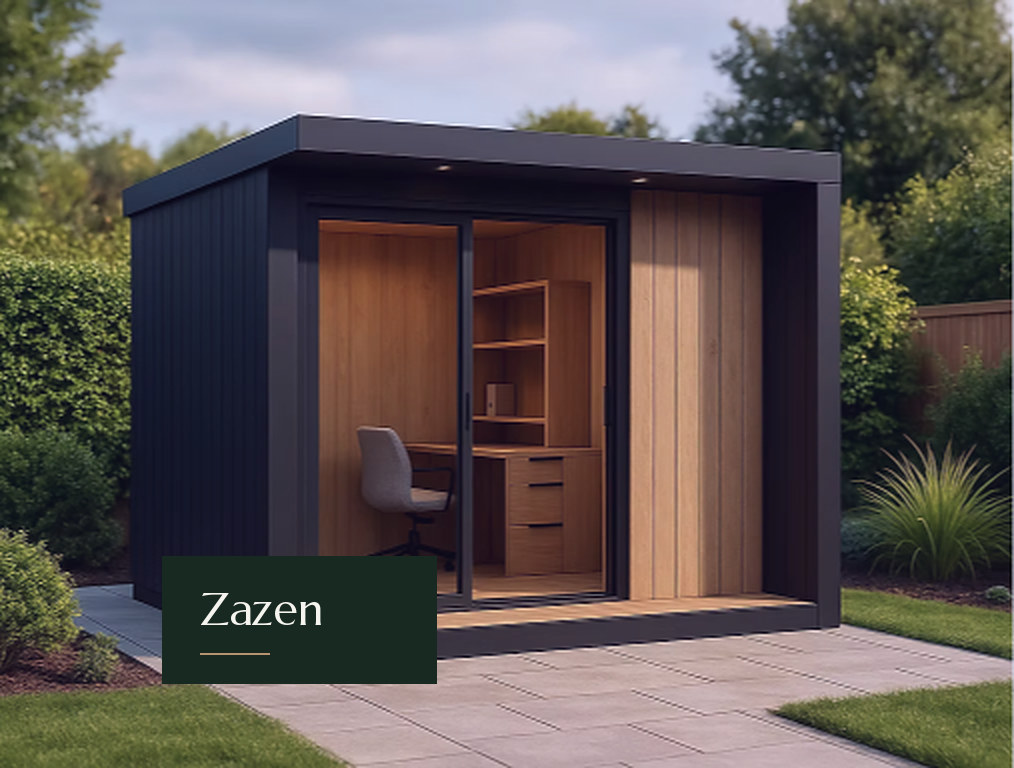
Many garden rooms in England don't need a planning application, because they can be built under permitted development rights for outbuildings. But those rights come with conditions, and some homes don't have them at all. Here's how it works in general terms.
The main conditions
- The building must be single storey and must not sit in front of the principal elevation of the house.
- Within 2 m of a boundary, the whole building must be no more than 2.5 m high. This is why so many garden rooms have flat roofs.
- Further from the boundary, the limit is 4 m for a dual-pitched roof or 3 m for other roofs, with eaves no higher than 2.5 m.
- Outbuildings and extensions together must not cover more than half the land around the original house.
- The use must be incidental to the house, such as an office, gym, studio or hobby room, rather than separate living or sleeping accommodation.
- Raised decking or platforms must be no more than 30 cm high.
When the rules are tighter
Listed buildings and flats or maisonettes don't benefit from these rights in the same way. Homes in national parks such as Dartmoor and Exmoor, National Landscapes (formerly Areas of Outstanding Natural Beauty), conservation areas and World Heritage Sites have extra limits. Some homes also have their rights removed by a planning condition or an Article 4 direction.
Getting certainty
If your project fits within permitted development, you can apply to your council for a Lawful Development Certificate. It isn't compulsory, but it confirms the building is lawful, which can be helpful when you sell. If you do need planning permission, a well-designed, sympathetic studio often has a good chance of approval, and we can prepare drawings to support your application.
Don't forget building regulations
Planning and building regulations are separate. Read our FAQs for a summary of when building regulations apply to garden rooms.
This article is general guidance for England, not legal advice. Rules differ in Wales, Scotland and Northern Ireland.